
The return of the Art Salon: the new Fantastica show in Rome leaves the big themes behind and instead lets it all hang out.
The Quadriennale d'Arte at the Palazzo delle Esposizioni couples a very contemporary exhibition with an exhibit from 1935. 90 years apart but offering uncannily similar presentations. Whats up?

The other day I went to check out a former student of mine, Joana Cruz, at the gallery COSMO where she works as co-curator, to see what was going on. We got to talking about this year's edition of the Quadriennale d’arte at the Palazzo delle Esposzioni. I was actually coming from the show, spiritedly called Fantastica, and I asked Joana what she had thought of it. She just said one word, “schizophrenic.” Many of the reviews I had read since the show opened lamented the lack of a shared vision among the five contemporary curators involved. There wasn't a common theme to hold it all together, thus the discombobulated sense of jumping from one completely different thing to another. There are times when this sort of disconnect might present larger problems, but the cellular effects of this show succeed because in large part the individual artists hold their own within these interconnected gallery settings.
Given the tragic backstory— the chief director of the Quadriennale, Luca Beatrice, died unexpectedly at the start of 2025 leaving behind an incomplete curatorial brief — Fantastica nonetheless succeeds as a team driven effort. The show’s real behind the scene virtuosos, however, are the exhibition designers Marco Rainò and Barbara Brondi from the Turin based studio BRH+. When Luca Molinari, writing for Exibart, asked the two about the show's original objectives, they responded that “…in Luca Beatrice’s vision, the Quadriennale should have been dense, intense, extroverted, multifaceted; The proposals of the curators and artists… should be presented through a modular exhibition system designed to accommodate their differences in expression, even when profound (translation DeepL).”
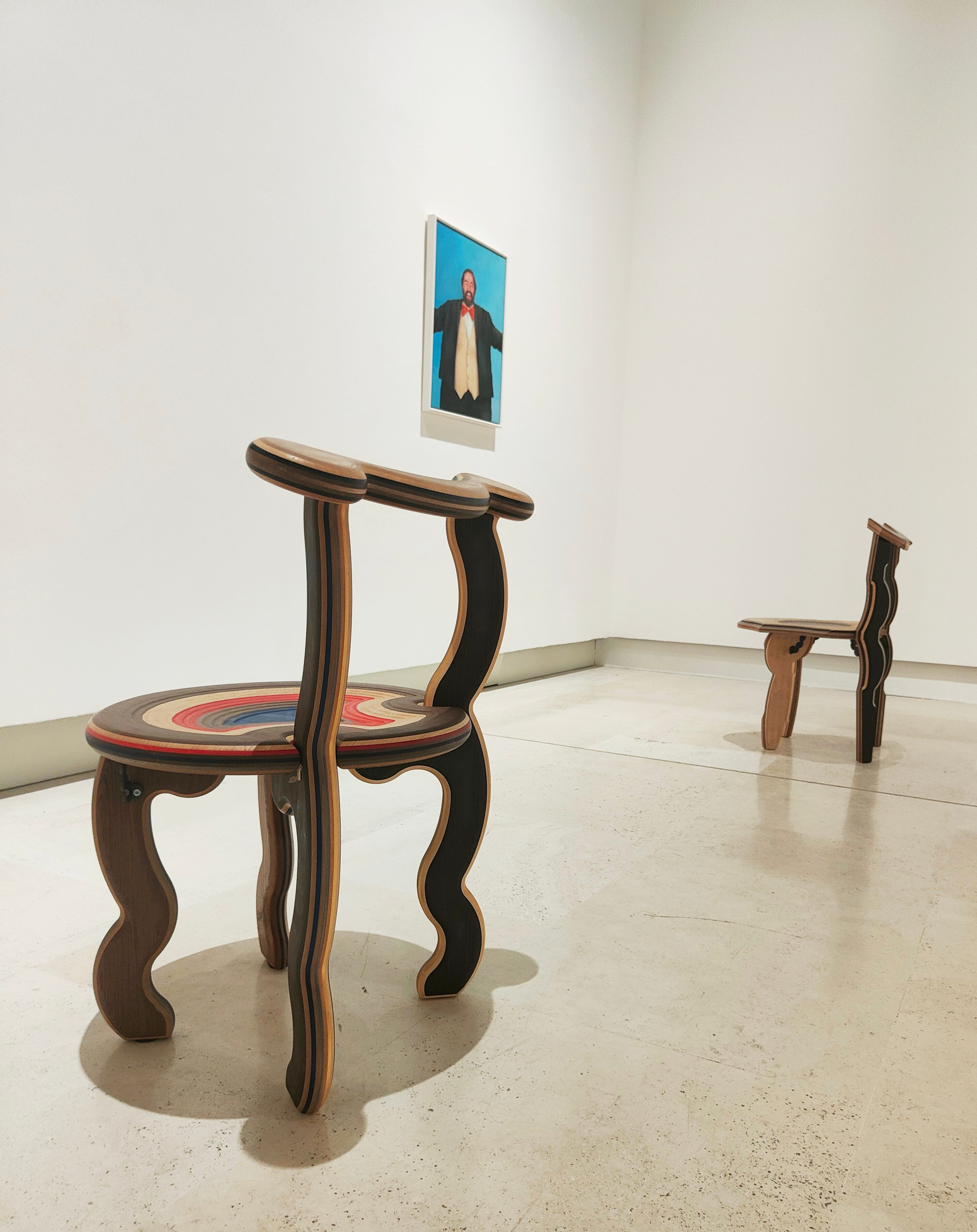
BRH+ definitely pulled this off, but not without some confusion. If you get hold of the printed exhibition plan, you can see that the five groupings are organized like an intertwined jigsaw puzzle, with one curatorial space backing into another, forcing one to walk around and around and then in and out to complete the intended sequence. Its ok, of course, I don't mind getting squashed under the huge mechanical arms of Arcangelo's “Hunger” machine chomping at the floor, while darting across the room to get to Sala 2 to catch a glimpse of Martino Gamper's “Sitzung” series of chairs. Francesco Stocchi's untitled section aims to get his team of artists to interact with each other, and somehow they do.
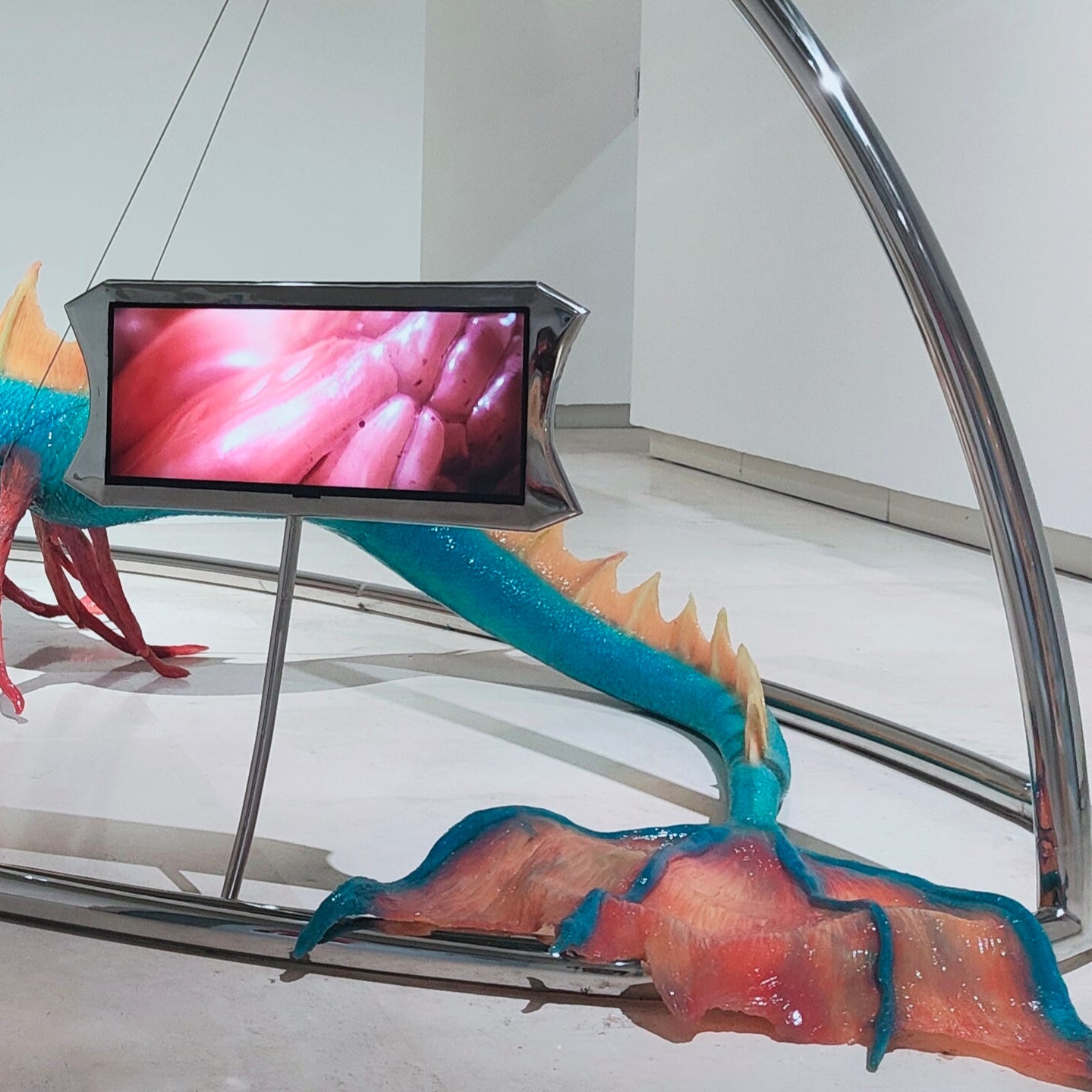
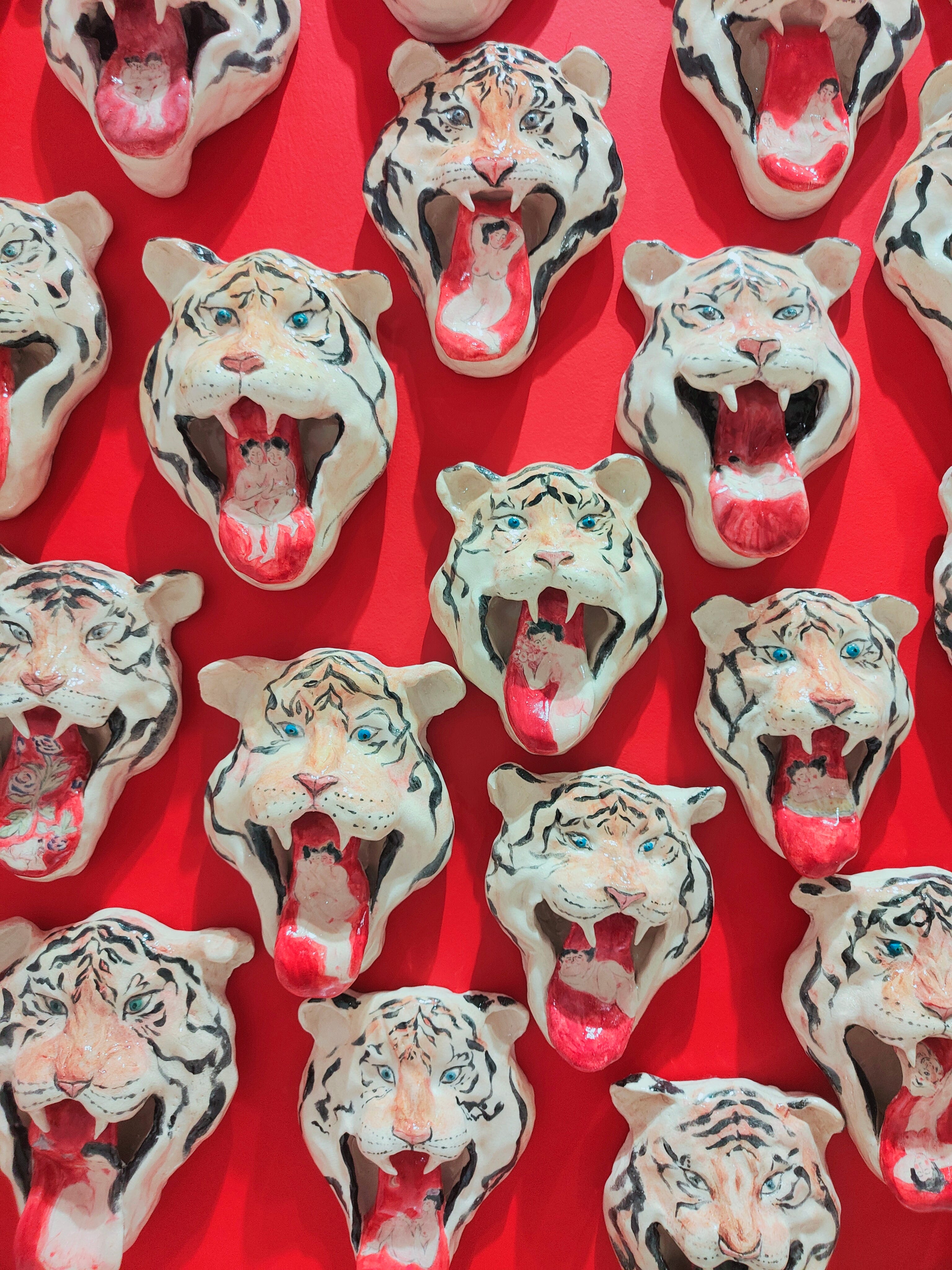
But you wouldn't be amiss if you thought that Shafei Xia's “Still Love” in Francesco Bonami's curatorial group actually was connected to something else. You eventually get it, but it helps tagging along with a couple of people to crowdsource your navigation skills through this show. Ditto for the “the age of images” curated by Emanuela Mazzonis di Praiafera, which is one of the galleries furtherest to the back, but well worth finding your way there. If you do, you will have walked through curator Luca Massimo Barbero's fantasy portrait gallery. And then there is Alessandra Troncone's “the unfinished body” a brilliantly combative collection of young artists’ works gushing, gooing and swinging all over the place. The whole thing ultimately adds up.
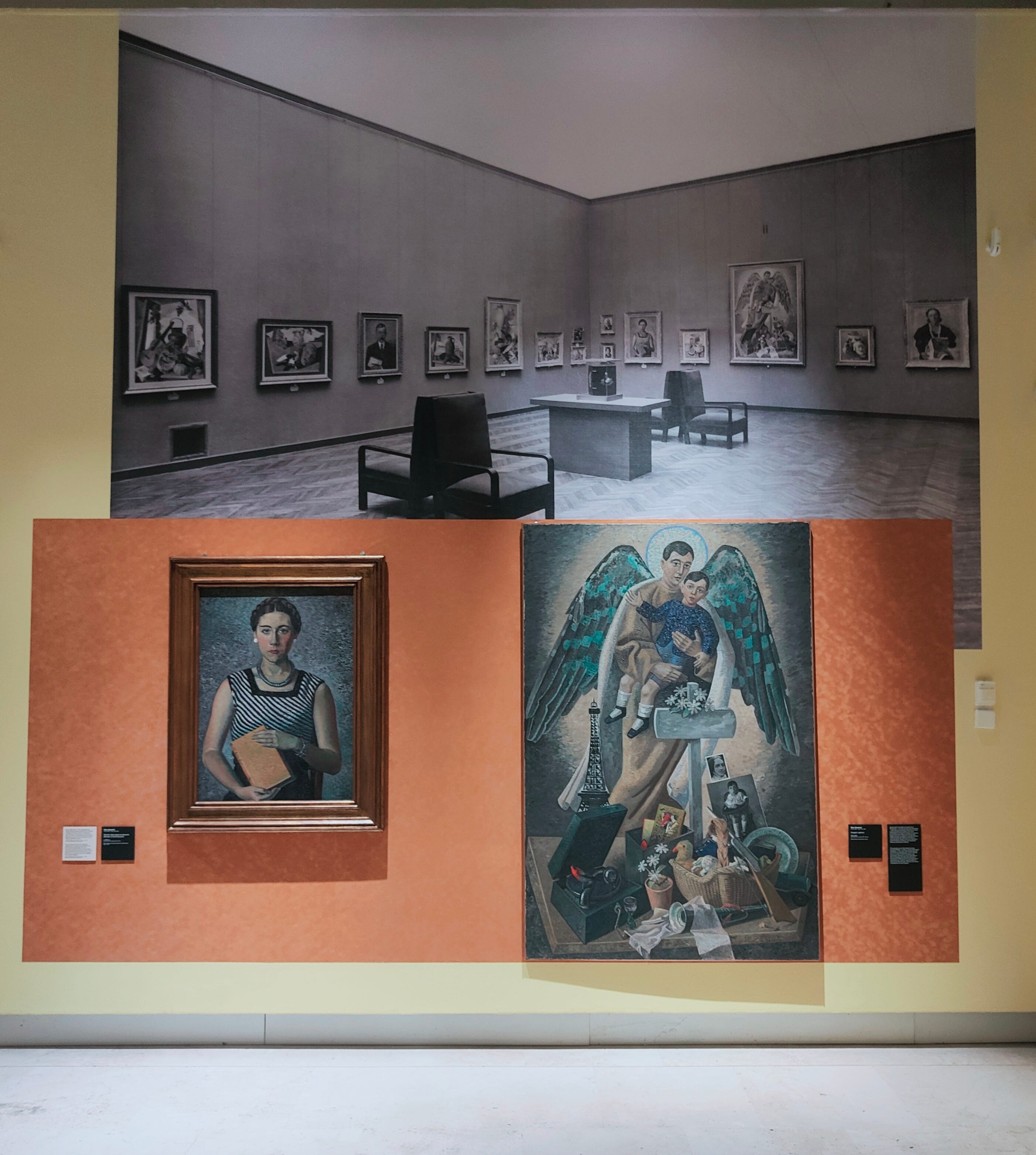
But there is another floor just above, and here is where the exhibition for me clicked together: “Q-1935, I Giovani e i maestri: La Quadriennale del 1935, curated by Walter Guadagnini (the young and the masters, the 1935 Quadriennale) which gives us an obligatory window into the past. You find yourself being transported up—via monumental staircase or inside mini-elevator cabin— into this excerpted collection from another era, Mussolini Fascist, to be precise, where we are provided glimpses of what must have been a truly impressive, if not somewhat questionable mise en scène of artworks, sculptures, architectural creations. Less successful are the wall size photographic backdrops depicting black and white images from the original rooms from 1935 that look too much like overblown screen shots from a web search. Nonetheless I kept finding myself fantasizing about shuffling around inside the grainy old photographs rather than out in the reality of the second floor.
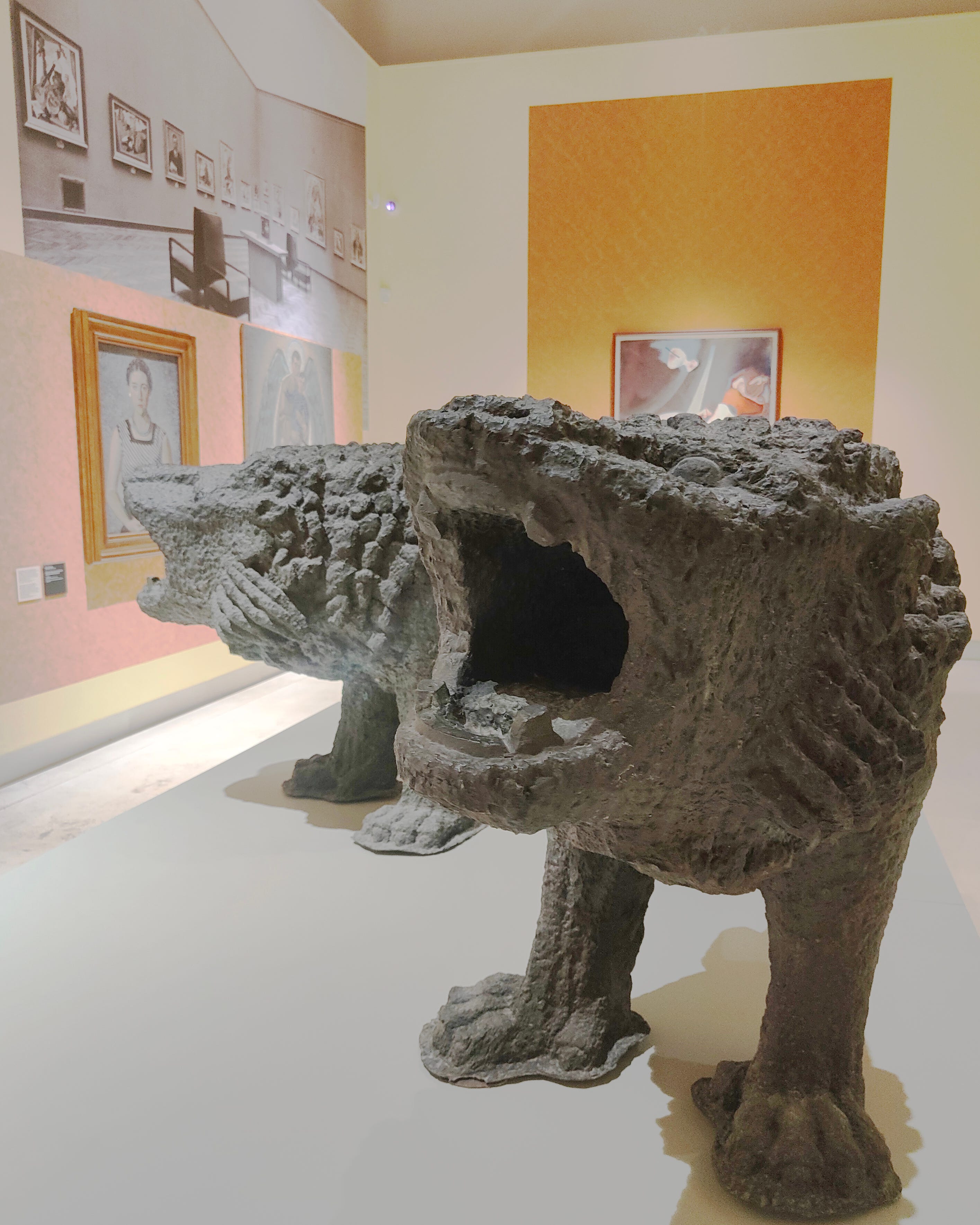
When I walked through these rooms, laid out following the concise circular logic imposed by the Palazzo delle Esposizioni's upper atrium space, it hit me that these two shows did indeed share a common thread, both the retrospective and the contemporary exhibitions have been staged in the tradition of the classic art salon. Back then, the exhibitions were not rhetorically themed, nor were they curated as we would understand the term today, but instead artworks appeared side by side and crowded together along gallery walls, hung by wires or arranged along the floors inside spaces decorated like over-sumptuous living rooms.
In other words, there wasn’t yet the magnifying glass focus that characterizes many contemporary exhibitions today, curated to question urgent issues like human existence or environmental annihilation. As Marcel Proust put it, before he wrote Swann’s Way and while he was working as an art critic, “A work is not beautiful because it represents something beautiful, but because it has succeeded in expressing a thought, in translating an emotion.” (“Ce n’est pas parce qu’une œuvre représente quelque chose de beau qu’elle est belle, mais parce qu’elle a su exprimer une pensée, traduire une émotion.”) Marcel Proust (Le Banquet, juin 1890, p. 197 in Jean-Yves Tadié, ed.,Les Salons de Marcel Proust, Gallimard, 1989).
For Proust, viewing art was like reading a great book, art opened your mind. You could do so, of course, with your feet up on a chaise longue and a cigar between your teeth. In 1935 however, the art salon atmosphere would not be quite the same as what Proust would have experienced in Paris. A visitor in 1935 would have likely been a member of the Fascist Party to get the show's full benefits, but that's another story. So Fantastica downstairs was also a kind of art salon, a place where rooms folded one into the other, where experiences were presented without heavy thematic crutches, and where you could imbibe an artwork as a thing onto itself.
No doubt the art salon is a typology worth exploring, and clearly artists today are not depicting picnics on riverfronts or futurist airplanes ripping through skies but rather they are depicting critical social media content, AI bots running amuck, or transgendered and or transgenerative worldviews in the making.
Nonetheless, since art exhibitions are considered to be reflections on our times, what are we to intuit from a show like this one, without a singular overarching theme to knit things tightly together? Fantastica is a title that suits the purpose, it leaves open much more than it restrains, but are we really heading in this direction? A place where anything goes just as long as it gets its moment in the spotlight? Damn the wars and global warming?
The thing that certainly dampens my enthusiasm for an art salon model is that it fits too snugly with a kind of elite oligarchic based society that is heedlessly going ahead without considering the lasting consequences of their actions. Not that I read these kind of misgivings into Fantastica. I just worry the smell of cigar smoke might be wafting around the corner.
Note: I plan to hit a few more shows this Fall, here in Rome, Venice and Milan, and I will continue to probe these questions on curatorial directions and just how these exhibitions might reflect greater social trends emerging in these critical times.